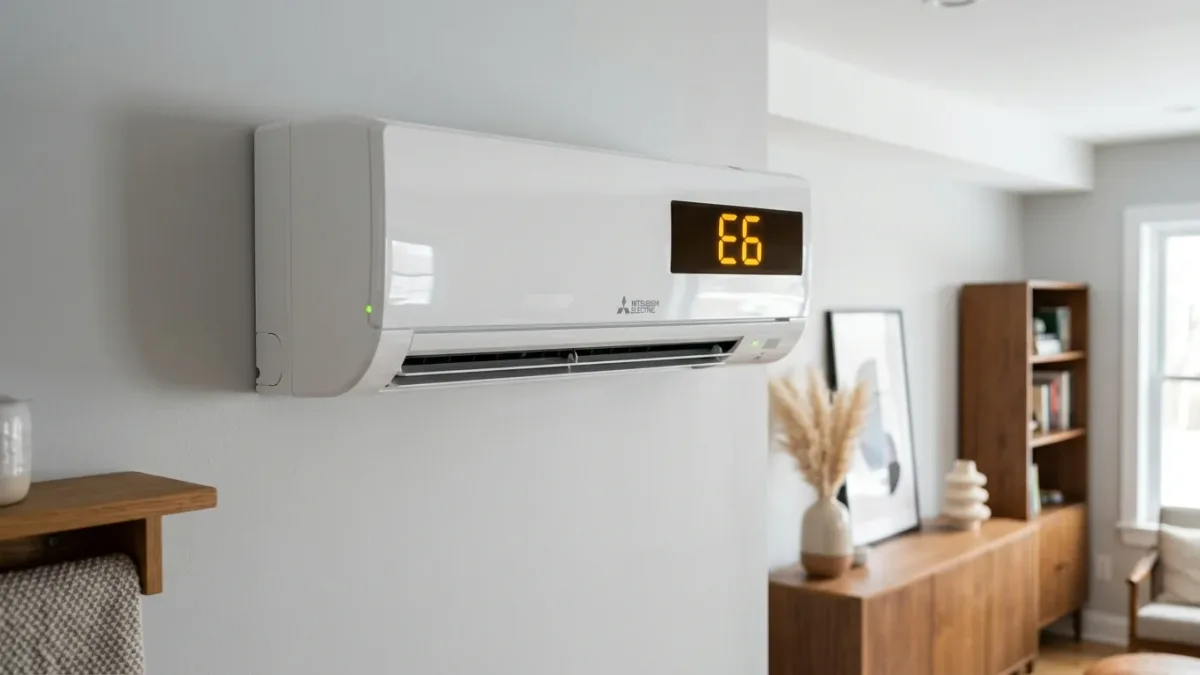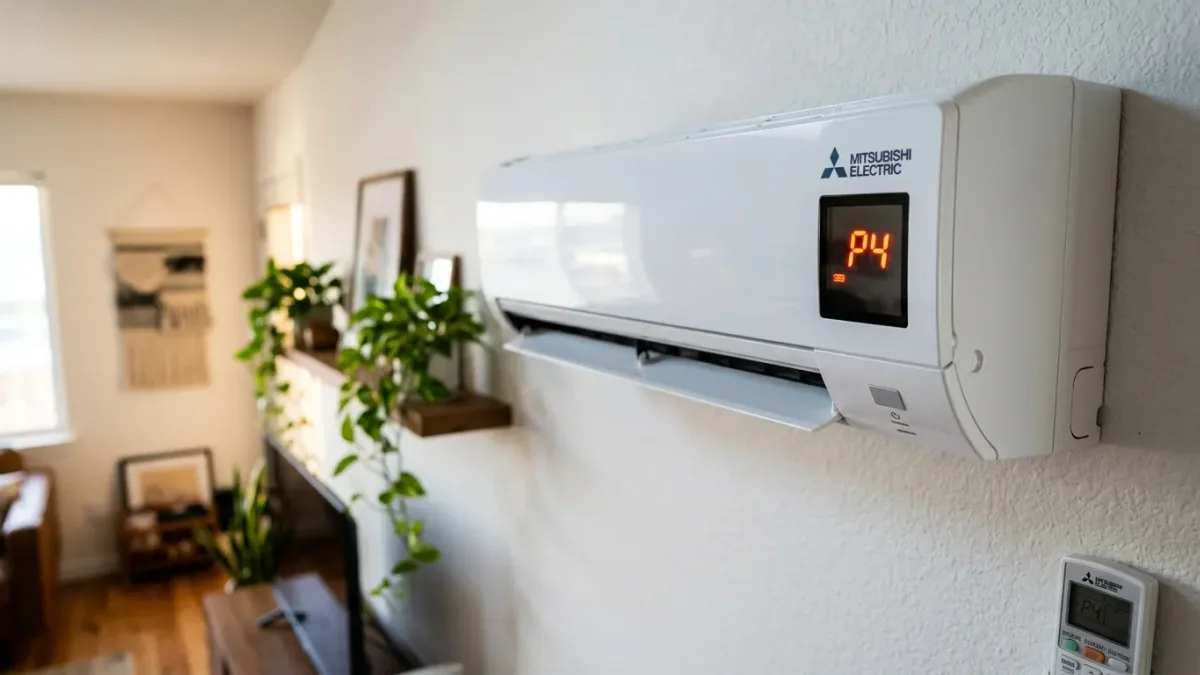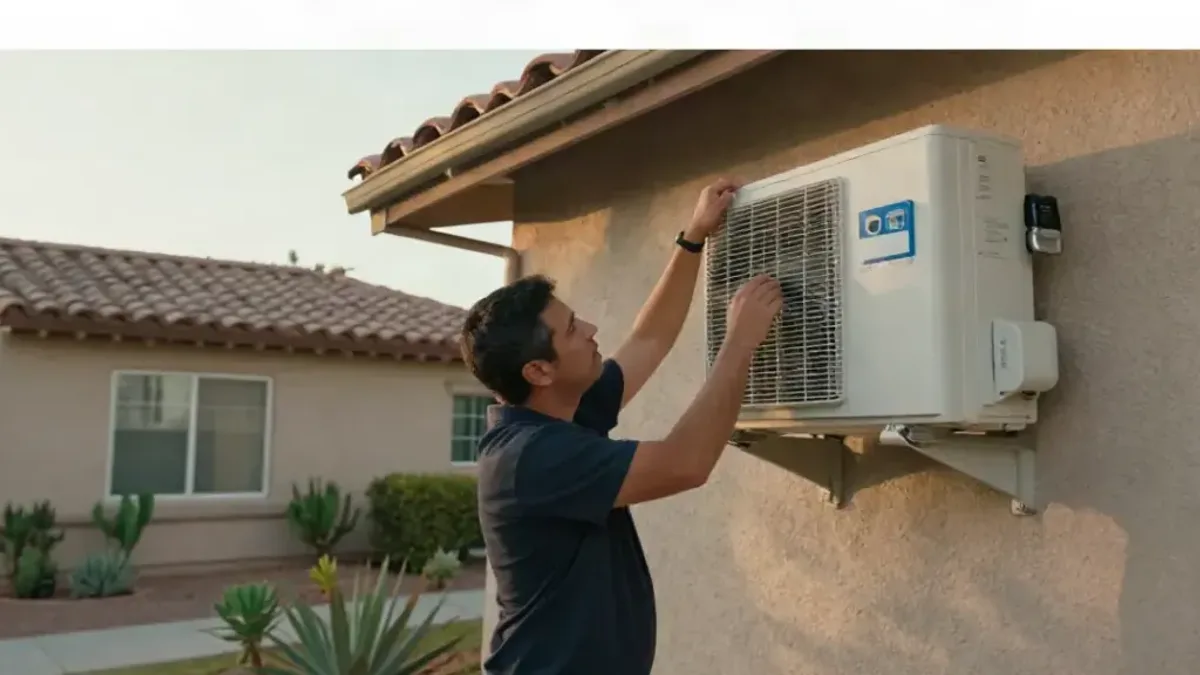
Ductless mini-split service referrals are not available here. For that equipment, contact a suitable specialist independently.
Start with settings you can safely check
Check the remote or controller for the intended mode and set temperature. If you have more than one indoor unit, note which units are affected and which modes are selected. Consult the model’s operating instructions rather than assuming that every controller behaves the same way.
Describe the airflow and visible condition
Is air moving, or has the indoor fan stopped? Is the accessible filter visibly dirty? Follow the manufacturer’s user instructions for filter care. Keep observations separate from conclusions: weak airflow does not prove that the system needs refrigerant.
Record the pattern before calling a specialist
Write down when the problem began, whether the outdoor unit appears to operate and any recent changes. A photo of the display and the equipment model can be useful. Do not remove electrical covers or attempt refrigerant work.
If your equipment is conventional central AC
Conventional central air conditioning supplies rooms through ducts and is different from a wall-mounted ductless mini-split. If that describes your equipment, our conventional AC repair information can help you prepare for a provider conversation.
What a cooling diagnosis should establish
A useful diagnostic explanation distinguishes the complaint from its cause. “The room stays warm” is an observation; a failed component is a conclusion that should follow appropriate checks. Ask a ductless specialist which operating conditions they observed and what evidence supports the recommendation.
For a system with several indoor units, explain whether all units stopped cooling at the same time. If only one unit is affected, note whether the others continue to operate. This distinction helps describe the request, but it is not enough to identify a failed part remotely.
Ask how the specialist will check operation after the proposed work. If the fault is intermittent, discuss whether the conditions that triggered it can be reproduced and how a returning symptom should be reported.
Compare the observations.
A clear description is more useful than a guessed repair. Use this table to organize what you can observe safely before contacting a specialist.
| Observation | Details to record | Do not assume |
|---|---|---|
| Air moves, but it is not cool | Operating mode, set temperature and which units are affected | That refrigerant must be added |
| Little or no airflow | Whether the fan operates and the accessible filter condition | That the outdoor unit has failed |
| Only one room is affected | Which indoor unit serves it and whether other units operate | That the whole system needs replacement |
Repair costs depend on the diagnosis.
A cooling complaint does not support a reliable online repair price. The diagnosis, equipment model, access and proposed corrective work all affect the scope. Ask whether the diagnostic visit has a charge, what the repair estimate covers and whether additional work requires your approval. A refrigerant refill should not be assumed to be the answer to every cooling problem.
Before approving a proposal
- Ask for the findings and the proposed work in writing.
- Confirm which charges apply if you decline the repair.
- Check whether parts, labor and any further visit are included.
- Ask which provider-specific terms apply if the symptom returns.
Keep care and service records together.
Keep the operating instructions available and follow their user-maintenance guidance. Record changes in airflow or operation rather than waiting until you can name a fault. Professional maintenance and repairs are different scopes; ask what each visit includes and keep the resulting paperwork with the equipment records.
Frequently asked questions.
An airflow restriction can be relevant, but a dirty filter alone does not establish the entire cause. Follow the user manual for accessible filter care and describe any continuing problem to a specialist.
Changing the setting does not diagnose a fault. Record the mode and setting you are using, then follow the model instructions if the system does not respond as expected.
No. The current referral offer excludes ductless mini-splits. These articles remain available for information; contact a suitable ductless specialist independently.
Choose the right next step.
For ductless equipment, use the manufacturer’s model-specific instructions and contact an appropriate specialist independently. A general guide cannot establish which repair your system needs.
If your request concerns a separate conventional system, read our air conditioning repair page. The Poway HVAC referral service accepts conventional AC and furnace requests only. Visit the locations hub to prepare an address-specific inquiry.
Explore eligible HVAC services ↗