Ductless mini-split service referrals are not available here. For that equipment, contact a suitable specialist independently.
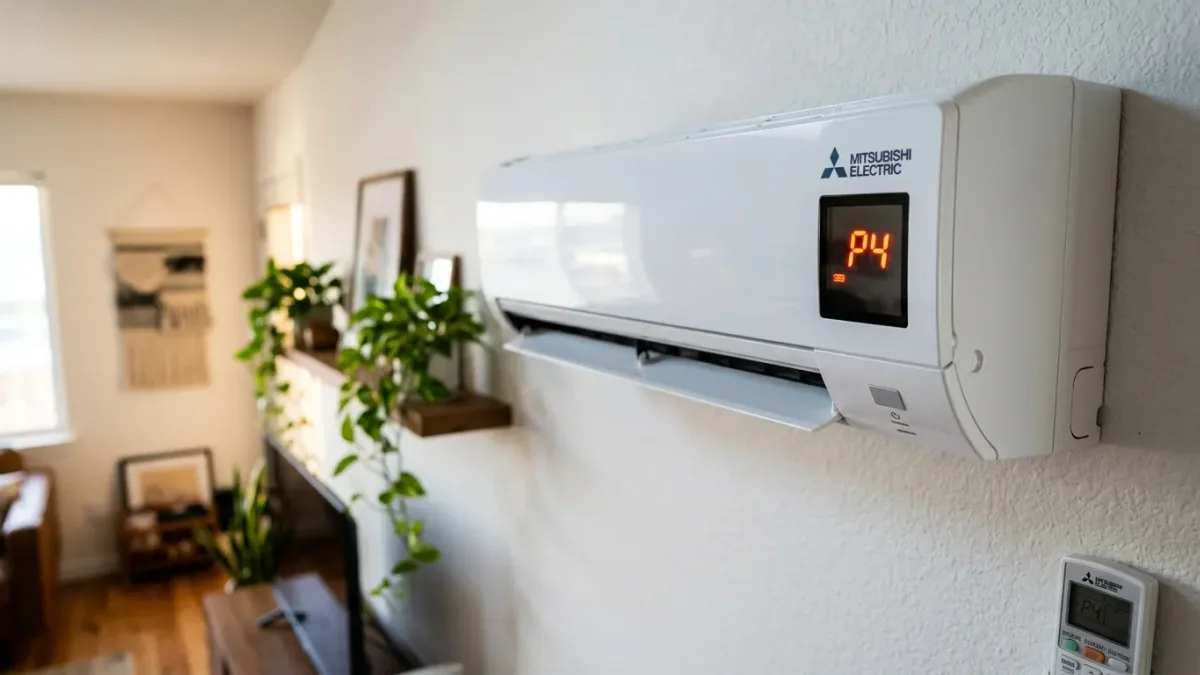
Why the model matters for P4
A code copied from another system’s manual may lead to the wrong conclusion. Record both equipment models and the controller details. Ask the technician to identify the applicable service information before quoting a component replacement.
If you also see water
Describe where the water appears, whether the system was running and whether it is near electrical equipment. Visible water is a symptom to report, not proof of a particular sensor fault. Do not open a drain pan or electrical compartment to investigate.
What to prepare for a specialist
Keep a photo of the code and note when it appeared. Include whether one or several indoor units stopped. Previous service paperwork can help establish what was changed, but does not establish the current cause.
Ask how the diagnosis will be confirmed
Ask which tests support the finding and what the proposed repair includes. A code is not a price quote. Compare the diagnostic explanation, scope and provider terms before authorizing work.
How to approach a P4 diagnostic visit
Start with the exact model rather than an assumed component. A qualified specialist should identify the applicable code table and connect the displayed indication with the symptoms you reported. Ask them to explain what the code means for your equipment family.
If the complaint involves water, report where it appears and whether the unit was operating at the time. The specialist can decide which drainage or sensing checks are appropriate. Water outside the expected path is useful information, but it does not by itself prove which component needs replacement.
Before authorizing work, ask what has been tested, what remains uncertain and how normal operation will be checked afterward. If the specialist proposes further investigation, clarify whether that is included in the original diagnostic charge.
Compare the observations.
A clear description is more useful than a guessed repair. Use this table to organize what you can observe safely before contacting a specialist.
| Observation | Details to record | Do not assume |
|---|---|---|
| P4 with visible water | Location of water and when it appears | That one specific drain component is responsible |
| P4 without visible water | Exact display and operating behavior | That there cannot be a drainage-related issue |
| P4 returns after a previous visit | Previous findings and the recurrence pattern | That the same part has necessarily failed again |
Repair costs depend on the diagnosis.
There is no single reliable “P4 repair price” without identifying the model and cause. Access, diagnosis, the corrective work and parts availability may affect the quote. Ask for separate explanations of the service-call charge and proposed repair. Do not treat a low online price for a drain task as a quote for your equipment.
Before approving a proposal
- Ask for the findings and the proposed work in writing.
- Confirm which charges apply if you decline the repair.
- Check whether parts, labor and any further visit are included.
- Ask which provider-specific terms apply if the symptom returns.
Keep care and service records together.
Follow the user-maintenance instructions for your particular system and report visible leaks or returning messages. Do not pour chemicals into equipment or bypass a switch to keep it running. Keep previous findings and repair descriptions so a specialist can distinguish a recurring complaint from a newly observed symptom.
Frequently asked questions.
Do not choose a repair from the code alone. The correct interpretation depends on the model documentation, and the cause must be established through appropriate diagnosis.
Keep your checks at the user-maintenance level described in the operating manual. Do not open electrical compartments or remove internal assemblies based on a generic online article.
Record when it returns and contact the specialist who performed the work. Ask how the new observation relates to the original findings and which follow-up terms apply.
Choose the right next step.
For ductless equipment, use the manufacturer’s model-specific instructions and contact an appropriate specialist independently. A general guide cannot establish which repair your system needs.
If your request concerns a separate conventional system, read our air conditioning cleaning page. The Poway HVAC referral service accepts conventional AC and furnace requests only. Visit the locations hub to prepare an address-specific inquiry.
Explore eligible HVAC services ↗